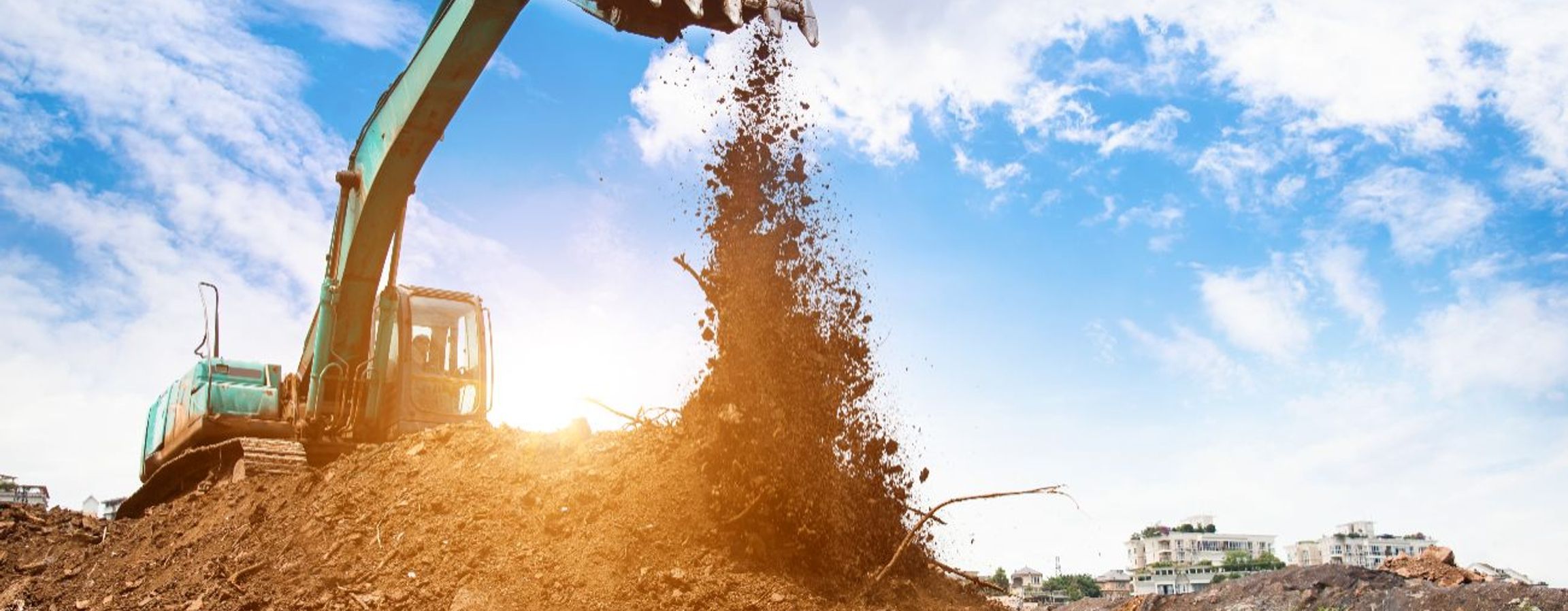
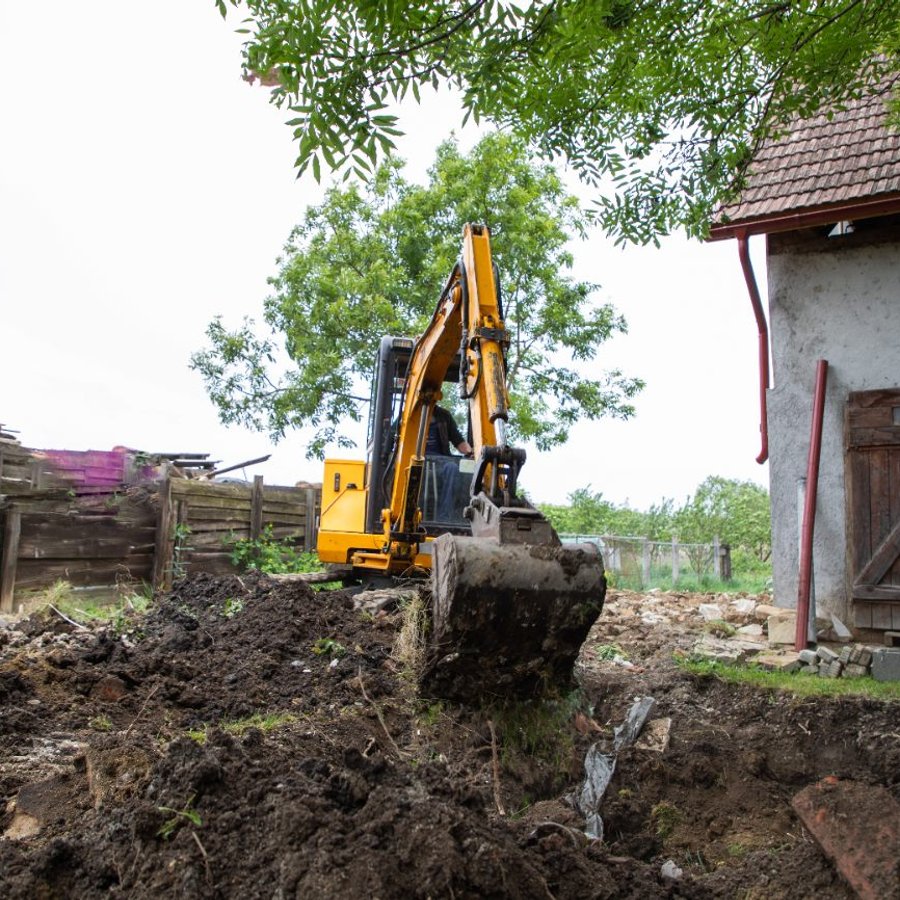
Excavation Services in Rutland, VT
We work throughout Rutland and the surrounding county on residential and commercial excavation, from driveways and foundations to full site prep.
John Trombley Construction is a family-owned excavation contractor serving Rutland and the surrounding area. Here's what we handle:
- Site preparation & grading
- Land clearing & tree removal
- Septic system install, repair & pumping
- Trenching & water lines
Every estimate is free, and emergency service is available when you need it. Reach out and we'll come take a look.
Get A Free EstimateExcavation and Site Prep in Rutland's Marble Belt
Rutland sits in the Vermont Valley along Otter Creek, right in the heart of the state's marble belt. That geology matters the moment we put a bucket in the ground. Instead of the slate you find in the towns to the west, the bedrock under Rutland is marble and limestone, a calcareous rock that is often close to the surface and frequently jointed and faulted. What that means in plain terms is that a lot of Rutland digs hit ledge, and they hit it sooner than folks expect. Over the top of that rock sits glacial till, the stony, bouldery, dense material that gets left behind by glaciers, so between the boulders and the shallow rock, there is rarely such a thing as an easy hole in this town.
We plan for that from the start. Vermont's building code sets a minimum foundation depth of five feet, or sixty inches, and footings along with any buried water or sewer line have to sit below the frost line so they do not heave when the ground freezes and thaws. In practice that means we are digging several feet down no matter what, and in Rutland that often puts us right into marble ledge. When we hit rock, we do not guess our way through it. We figure out whether we can rip it, break it, or work around it, and we talk with you before the meter is running on anything you did not plan for.
Because we serve all of Rutland County and nearby eastern New York, we know how much the ground can change from one lot to the next. A parcel up on the valley slope may be all till and rock, while a lot down near Otter Creek can be clay-heavy with a higher water table. We read the site before we price the work, and estimates are always free.
Working on Rutland's Built-Up and Infill Lots
Rutland is the largest and most built-up community in the county, and that shapes almost every job we do here. A lot of our Rutland work is not raw land. It is established lots and infill parcels with houses already on them, older systems in the ground, and utilities running in every direction. That calls for a different approach than clearing a fresh piece of ground out in the country.
Tight access is the everyday reality in town. Driveways are narrow, lots are close together, and there is often a neighbor's fence, a mature tree, or a paved surface a few feet from where we need to dig. We size our equipment and stage our work to fit the space we actually have, and we take care to protect what is staying put. Before we open the ground we account for existing water, sewer, gas, and electric so we are not surprised by a line that was put in decades ago and never mapped well.
Older properties also mean older infrastructure. In a built-up town like Rutland, we regularly work around aging septic systems, tired water lines, and foundations that predate current code. Whether we are trenching a new water line, replacing a failed septic, taking down a structure, or clearing overgrowth off a lot that has not been touched in years, we plan the job around what is already there. It is slower and more careful than open-field work, but it is the right way to work in a place where your project sits a stone's throw from your neighbor's.
Septic Systems on Rutland's Valley-Bottom Soils
Every septic system in Vermont starts the same way, whether it is a new install or a repair on an existing one. Before any design is set, the site gets a soil and site evaluation, the perc and soil test, that looks at the soil type, how high the seasonal groundwater sits, and how deep it is to bedrock. That is not red tape for its own sake. It is what the state's Wastewater System and Potable Water Supply Rules require, and it is genuinely how you find out what a lot can handle.
In Rutland that evaluation often turns up conditions that steer the design. Down in the valley bottoms near Otter Creek, the glacial till carries a lot of clay, and the water table can sit higher than you would like. Up on higher ground the bedrock can be shallow. Any one of those, poorly drained clay soil, a high water table, or shallow marble ledge, commonly means a conventional in-ground drain field will not work. In that case the system is designed as a mound, where the drain field is built up above the natural grade with imported sand and gravel so the wastewater has enough good soil to move through before it reaches groundwater or rock.
We handle the whole range, from new septic installation to repairs on systems that have finally given out, plus tank pumping to keep a working system healthy. Because so many Rutland properties are older, we see plenty of systems that were sized for a different era or were never quite right for the ground they sit in. We work off the site and soil evaluation, follow the state rules, and build what the lot actually calls for rather than what is cheapest to drop in.
When a system backs up, it does not wait for business hours, which is why we offer emergency service. If you have got sewage surfacing in the yard or a tank you think has failed, call us and we will get out to assess it.
Year-Round Work Through Mud Season and Winter
Vermont gives you a full calendar of ground conditions, and Rutland is no exception. Spring mud season saturates the region's clay-heavy soils, and that is felt hard in the valley bottoms near Otter Creek where the water sits high to begin with. Saturated clay is slippery, unstable, and easy to make a mess of if you rush it, so there is a right time and a wrong time to move dirt. We time excavation and trenching around those conditions so your site stays workable and the finished grade actually holds.
On the other end of the year, frost drives everything back down deep. That five-foot foundation depth and the rule that water and sewer lines sit below the frost line are not suggestions in a place where the ground freezes hard. We build for frost so your lines and footings do not heave a season or two down the road.
We are a family-owned outfit based right up the road in Castleton, so Rutland is home turf, not a long haul. Alongside the digging and septic work we handle land clearing and tree removal, demolition, trenching and water lines, and snow removal to keep driveways and lots open through the winter. Estimates are free, emergency service is available, and we would rather talk through your Rutland project honestly than sell you more than the ground needs.
Rutland Excavation Questions
Quite possibly. Rutland sits in Vermont's marble belt, and the marble and limestone bedrock here is often shallow and jointed, so excavation and trenching frequently reach rock. On top of that the soil is glacial till, which is stony and full of boulders. We read the site before we price the job and talk with you before doing anything about rock that changes the scope, so there are no surprises on the bill.
That is a lot of what we do in Rutland, since it is the most built-up town in the county and much of the work is on established or infill lots. We size our equipment to the access we actually have, stage the work to protect what is staying, and account for existing water, sewer, gas, and electric before we open the ground. It is more careful and slower than open-field work, but it is the right way to dig when your neighbor is a few feet away.
In the valley bottoms near Otter Creek, the glacial till is clay-heavy and the water table can sit high, and Vermont's rules require a soil and site evaluation before any septic design. When that test shows poorly drained clay, a high water table, or shallow bedrock, a conventional in-ground drain field will not work, so the system is designed as a mound. That means the drain field is built up above grade with imported sand and gravel to give the wastewater enough good soil to filter through.
Spring mud season saturates the region's clay soils, and that hits hardest in the low ground near Otter Creek. Saturated clay is unstable and easy to damage, so some work is better timed around it. We will tell you honestly whether your job should wait for firmer ground or whether it can be done well right now, and we plan the work so the finished grade holds.
Serving Rutland & Beyond